


Seiko 7A28-7090 Yacht Timer: The Holy Grail of Vintage Seiko Quartz Chronographs
The Holy Grail of Vintage Seiko Quartz Chronographs
At The Samurai Vintage, we specialize in Japanese domestic market watches that tell a real story — pieces that blend technical innovation, distinctive design, and limited availability. Few references capture that spirit better than the Seiko 7A28-7090 Yacht Timer.

It sits at a pivotal point in Seiko’s history: the dawn of analog quartz chronographs, executed with the brand’s signature attention to detail and sporty character. Whether you’re a longtime collector of vintage Seiko 7A28 models or just discovering the Seiko yacht timer lineage, this guide brings together the key facts, context, and practical advice you need.
The 7A28 Movement: Seiko’s Quartz Chronograph Milestone
To appreciate the 7A28-7090, it helps to understand the movement that powers it. In 1983, Seiko introduced the Caliber 7A28, widely recognized as the world’s first analog quartz chronograph.
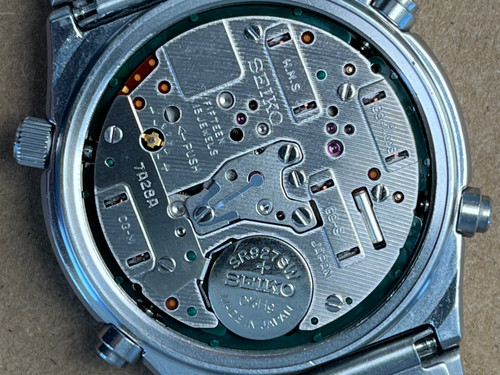
Unlike the LCD-heavy quartz watches that dominated the era, the 7A28 delivered a familiar mechanical-style experience with quartz precision. It featured a 15-jewel, all-metal construction with separate stepper motors, central chronograph seconds hand offering 1/20-second timing, a 30-minute counter, and split-time capability. Serviceable and reliable, it bridged the gap between traditional chronograph feel and modern accuracy.
The 7A28 family powered a wide range of Seiko sports watches throughout the 1980s, but the 7A28-7090 stands out as one of its most charismatic and collectible expressions.
History of the Seiko 7A28-7090 Yacht Timer
The 7A28-7090 (sales code SAY080) was produced exclusively for the Japanese domestic market. It first appeared in Seiko’s 1984 Sports catalog, priced at approximately 35,000 yen, and was discontinued by 1985–86. This short production window — roughly two to three years — combined with the natural attrition of 40-year-old quartz watches, has resulted in relatively low survival numbers.

No official factory production figures have ever been published, but collector consensus and catalog research consistently describe it as a limited-run reference. Many surviving examples carry May 1983 caseback dates, underscoring its place among the earliest 7A28 chronographs. Its “Yacht Timer” nickname comes from the regatta-inspired dial treatment, which has made it a cult favorite among enthusiasts of vintage Seiko 7A28 and Seiko yacht timer watches.

Design: Asymmetrical Tool-Watch Character
The 7A28-7090’s appeal is immediate and lasting. The case is bead-blasted stainless steel, measuring approximately 40 mm in diameter with 20 mm lug width. Its complex, asymmetrical shape and oversized top pushers give it an instrument-like presence that feels purposeful rather than decorative. The polished bezel adds a subtle contrast that elevates the overall finish.

The dial is the real signature: a clean white field with applied indices, paired with a striking blue 30-minute subdial at 9 o’clock. Alternating light and dark blue sectors every five minutes create excellent legibility for timing sequences, while the bright yellow-orange hand in the register and light-blue “Yacht Timer” script complete the distinctive look.

Originally fitted with a perforated rubber GL21A strap (rally-style holes for a sporty feel), these straps have become extremely rare. Many examples now wear aftermarket or replacement bands, which is why complete original-strap sets are especially prized.
Function: Yacht Timer Style, Standard Chronograph Performance
It is important to be clear on what this watch actually does. The Seiko 7A28-7090 is a standard analog quartz chronograph based on the 7A28 caliber — not a dedicated regatta countdown timer like later Seiko models. The segmented 30-minute subdial provides visual reference for race starts and enhances the yacht-themed identity, but the movement itself offers classic functions: start/stop/reset, split timing, and 1/20-second precision.

Water resistance was rated at 30 meters — sufficient for splash protection but best treated as a vintage sports chronograph rather than a modern tool watch. This distinction helps serious collectors separate fact from marketing hype when evaluating vintage Seiko yacht timers.
Later Generations of Seiko Yacht Timers
The 7A28-7090 represents the stylish beginning of Seiko’s yacht-timer concept. Subsequent models took the idea further with more specialized functionality:
- The 8M35 Yacht Timer (early 1990s) introduced true preset countdown timers (5/10/15 minutes plus free-set), a rotating bezel, and higher 150 m water resistance. It remains more accessible today while retaining strong collector interest.
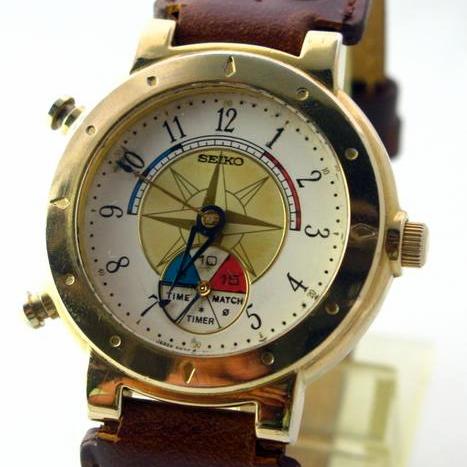
- The 7T84 series (late 1990s onward) added even more advanced regatta features, including preset 5-, 6-, and 10-minute countdowns that automatically trigger the stopwatch at zero — exactly what competitive sailors require.
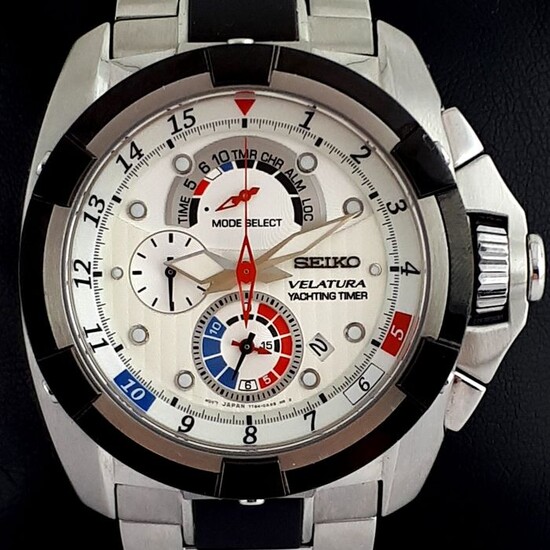
In this evolution, the 7A28-7090 remains the historically significant pioneer: the one that first combined 7A28 innovation with regatta aesthetics.
Market Position and 2026 Outlook for Vintage Seiko 7A28 Watches
As interest in early analog quartz chronographs continues to grow, the Seiko 7A28-7090 has appreciated steadily. Current market data from major platforms (May 2026) shows serviced, attractive examples trading between $2,800 and $4,000+ USD, with full sets retaining the original rubber strap or exceptional condition reaching the upper end.

Head-only pieces are more common, while originality, service history, and dial condition remain the primary value drivers. We expect continued moderate appreciation — likely 15–25% over the next 18–24 months — as more collectors recognize the importance of these short-run JDM references within the broader vintage Seiko 7A28 and Seiko yacht timer categories.
Buying Advice from The Samurai Vintage
When evaluating a 7A28-7090:
- Verify the caseback reference and serial date (1983 examples are especially desirable).

- Test chronograph functions thoroughly, including clean reset and 1/20-second operation.
- Inspect the dial for originality and the case for honest wear consistent with its age.
- A recent service adds confidence, as these movements are repairable but specialist knowledge is increasingly valuable.
We always encourage buyers to prioritize condition and provenance over chasing the lowest price.
Sieko 7a28 Yacht Timer FAQ
No. While it carries the “Yacht Timer” name and features a beautifully segmented blue 30-minute subdial designed for visual legibility during race starts, it uses the standard 7A28 chronograph movement. It does not have programmable countdown functionality like later dedicated yacht timers (such as the 8M35 or 7T84). The regatta association is primarily aesthetic and thematic.
It is genuinely scarce. This was a short-production Japan Domestic Market (JDM) model, appearing in catalogs around 1984 and disappearing shortly after. Its distinctive asymmetrical case was used on very few other 7A28 references, which adds to its exclusivity. Clean, serviced examples rarely appear on the market.
This example has been professionally serviced in Japan. The movement runs accurately with all chronograph functions working smoothly. The bead-blasted case shows only light, honest vintage wear. The original mineral crystal is clean and scratch-free. It is one of the better-conditioned examples we have seen.
This is a known characteristic of the 7A28 movement after servicing. Due to the original design of the Seiko hands, the chrono seconds hand can sit approximately 0.5° off center when reinstalled. It is common across serviced 7A28 watches and is not noticeable during normal wear.
The original perforated rubber GL21A strap is extremely rare today as most have perished over the decades. This watch comes with a high-quality navy blue rubber strap and a matching light blue/navy NATO strap, both chosen to complement the dial colors perfectly for different styling options.
Yes. At approximately 40mm in diameter with a relatively slim profile, it wears comfortably. The 30m water resistance rating is suitable for everyday use and incidental water exposure, though it should not be used for swimming or diving.
Like most vintage quartz movements, we recommend servicing every 5–8 years depending on usage. The 7A28 is a fully serviceable, all-metal caliber with 15 jewels — one of the advantages of this movement compared to later disposable quartz modules.
It combines several rare qualities: it is powered by Seiko’s groundbreaking 7A28 (the world’s first analog quartz chronograph), features one of the most striking dials in the series, has a short production run, and possesses a distinctive asymmetrical case design. These factors have made it a recognized grail within the vintage Seiko community.

Written by Will
Co-founder, Samurai Vintage
Thanks for spending time reading my sharing. This is Will, Co-founder of Samurai Vintage. With over 10 years of experience collecting and curating Japanese vintage watches, what started as a personal hobby has grown into one of Asia’s few dedicated JDM-focused vintage watch shops here. I love sharing interesting stories and insights with fellow enthusiasts like you so we can grow our passion for affordable vintage watches together. Cheers and enjoy!
Leave a comment